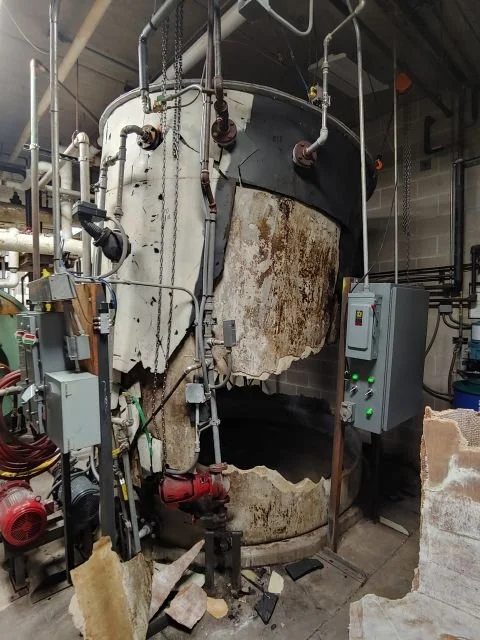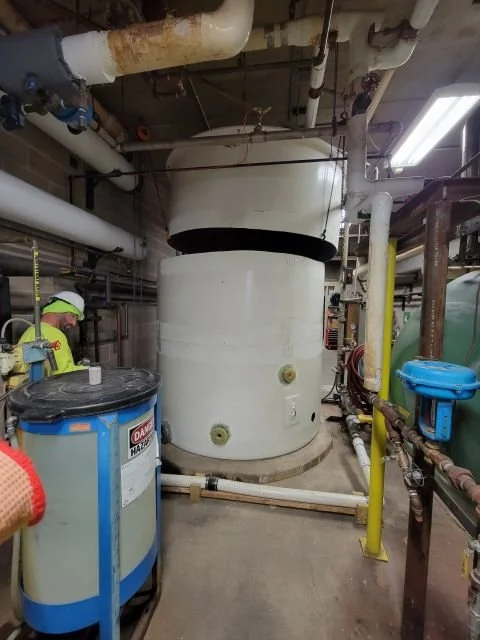
Not every fiberglass tank failure happens because the tank was old.
Sometimes, it happens because it was repaired incorrectly.
This is one of those cases.
A company traveled from out of state to reline a tank right here in our own backyard. (We'll take the blame for the marketing miss - we wish they had found us first.)
The original work started correctly. The damaged resin and corrosion barriers needed to be removed, and unfortunately some of the structural fiberglass had to come off as well.
But that's where things went wrong.
When it came time to rebuild the tank, only a thin veil and corrosion barrier were installed.
Here's the problem: veil is not structural fiberglass.
Veil provides a corrosion-resistant surface. It does not restore the strength of a tank after structural laminate has been removed. Once that structural glass is gone, it has to be replaced with new structural fiberglass—not just covered with resin and veil.
The result?
Catastrophic failure just one week later.
Thankfully, no one was injured. That's when we got the call.
Our solution wasn't another patch. We built a completely new fiberglass tank, cut it into three sections so it could be brought into the facility, and reassembled it onsite to get the customer back in operation.
The takeaway is simple:
Not all fiberglass repairs are created equal.
The difference between a repair that lasts decades and one that fails in days often comes down to understanding the engineering behind fiberglass—not just knowing how to lay resin.
When downtime is measured in hours and safety is on the line, doing it right the first time matters.
#FiberglassSolutions #FiberglassRepair #FRP #TankRelining #IndustrialMaintenance #ChemicalProcessing #FoodProcessing #Manufacturing #BuiltToLast